That 'Useless' Required Course Is the Cheapest Career Experiment You'll Ever Run
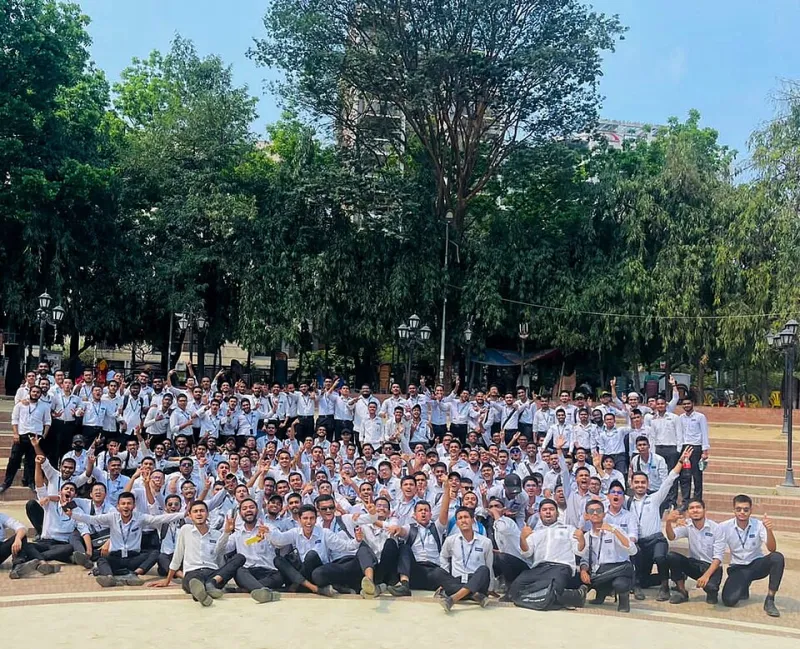
Photo: Randomthing2015, CC BY 4.0, via Wikimedia Commons
Every semester, some version of this conversation happens in a dorm hallway: a sophomore groans that they have to take an art history course to graduate, calls it a waste of tuition, and asks if anyone knows an easy section.
Fair enough. Three credits at a public university can run well past a thousand dollars before fees, and nobody dreams of spending that on something that isn't in their major. But the groan misses the real math. A required gen-ed is a career experiment that costs you nothing extra. You were going to pay for those credits regardless. The only question is whether you leave the semester with a grade — or with a grade plus concrete evidence about what you actually want to do for the next forty years.
The cheapest career experiment on the market
Line up your options. Job shadowing gets you one day in an office, usually arranged through a family friend. An internship means applications, interviews, and often an unpaid summer. A gap year costs real money. A master's degree costs a lot more.
A required course gets you roughly 40 hours of contact time, plus homework, plus a professor who has worked in or around the field, for credits you needed anyway. That is absurdly cheap as experiments go.
The catch is that most students treat the course as something to survive rather than something to read. They memorize for the midterm, write the paper about whatever's easiest, and never once ask whether the work itself felt good.
Read the syllabus before the add/drop deadline
A gen-ed is not one course. It's five different courses wearing the same catalog number. Before you commit, look at who's teaching it and how.
- Lecture vs. seminar. A 300-person lecture tells you about a topic. A 20-person seminar where you have to argue tells you about a profession.
- Lab or applied sections. If there's a version with a hands-on component, take it. Doing the work reveals more than hearing about it.
- Service-learning and practicum sections. These are the closest thing to a free internship you'll find on a transcript.
- Who's teaching it. Check the department page, not just a ratings site. A working practitioner teaching one night a week is a different resource than a tenured theorist. Both are useful — just know what you're getting.
Rewrite the assignments in your head
Most gen-ed assignments are flexible enough that nobody notices when you aim them at your own future. A few swaps that cost nothing:
- If there's a "profile a professional in the field" paper, pick someone doing the job you're curious about. You now have a legitimate excuse to cold-email a stranger.
- If the final project is open-topic, build it around a company, policy, or dataset connected to a career you're circling.
- If group presentations are on the syllabus, volunteer to handle the research and the slides — you'll end up with a portfolio piece instead of a shared grade.
- If there's a data, coding, or writing component, do it in the tool the industry actually uses, even if the professor accepts anything.
Three questions to ask in the first two weeks
That's it. Three. You don't need to announce that you're career-shopping.
- "What does a normal Tuesday look like for someone who does this professionally?"
- "What's the part of this work that people burn out on?"
- "If I wanted to try a small version of this before I graduate, what would you suggest?"
Most instructors light up at question two, because almost nobody asks it. The answer is usually the most useful thing you'll hear all semester.
Read the mid-semester signals honestly
Around week six, do a five-minute audit. Notice which of these is true:
You're bored, not resentful. Boredom often means the material is fine but the pace is wrong. Resentment — the specific irritation of doing work you find pointless — is a real signal.
You keep talking about it. If you explain the reading to your roommate unprompted, pay attention. That's a stronger signal than the grade.
The problem sets leave you wired, not wiped. Finishing something hard and wanting to keep going is the closest thing to a fit test that exists.
You like the material or the approval. These get confused constantly. Ask yourself whether you'd read the same thing without a deadline or a grade attached.
Convert it into something a recruiter can see
Exploration without documentation is a hobby. Exploration with documentation is evidence.
- Build one artifact. A two-page policy brief, a cleaned dataset, a mock marketing plan, a short annotated bibliography. Put it on a personal site or a portfolio page. Two sentences of context above it is enough.
- Add a coursework line. If you're early in college and your resume is thin, a "Relevant Coursework" section with a project description beats an empty page.
- Name the tools. "Built a budget model in Excel" is a resume line. "Took an accounting class" is not.
- Keep the professor. A short note or a LinkedIn connection at the end of the semester costs you nothing and becomes useful in two years.
The trap: mistaking a good grade for a good fit
An A- in accounting does not mean you'll enjoy busy season. Grades measure attendance, compliance, and test-taking — three skills that correlate weakly with job satisfaction. Plenty of students excel at something they'd hate doing eight hours a day and struggle with something they'd love.
If a course lands as a hard no, that's a win. You found out in a classroom instead of after a $70,000 graduate degree. Look for the adjacent field — the cross-listed version, the applied version, the one housed in a different department.
If it lands as a maybe, that's a second course, a student organization, or a conversation with someone doing the job.
What to do this week
- Open your degree audit and identify which required courses are still unmapped to any career idea.
- Pull three syllabi for next semester and read the assignment descriptions, not the grading breakdown.
- Pick the one gen-ed you've been avoiding and figure out which version of it gives you the most contact time with a real person.
- Put one office-hours visit on your calendar within the first three weeks.
Smart students don't declare a major at nineteen and spend four years hoping it works out. They use the free stuff — required credits, curious professors, low-stakes projects — to buy information before the expensive decisions arrive.