Anyone Can Sound Smart Now. Prove You Actually Are.
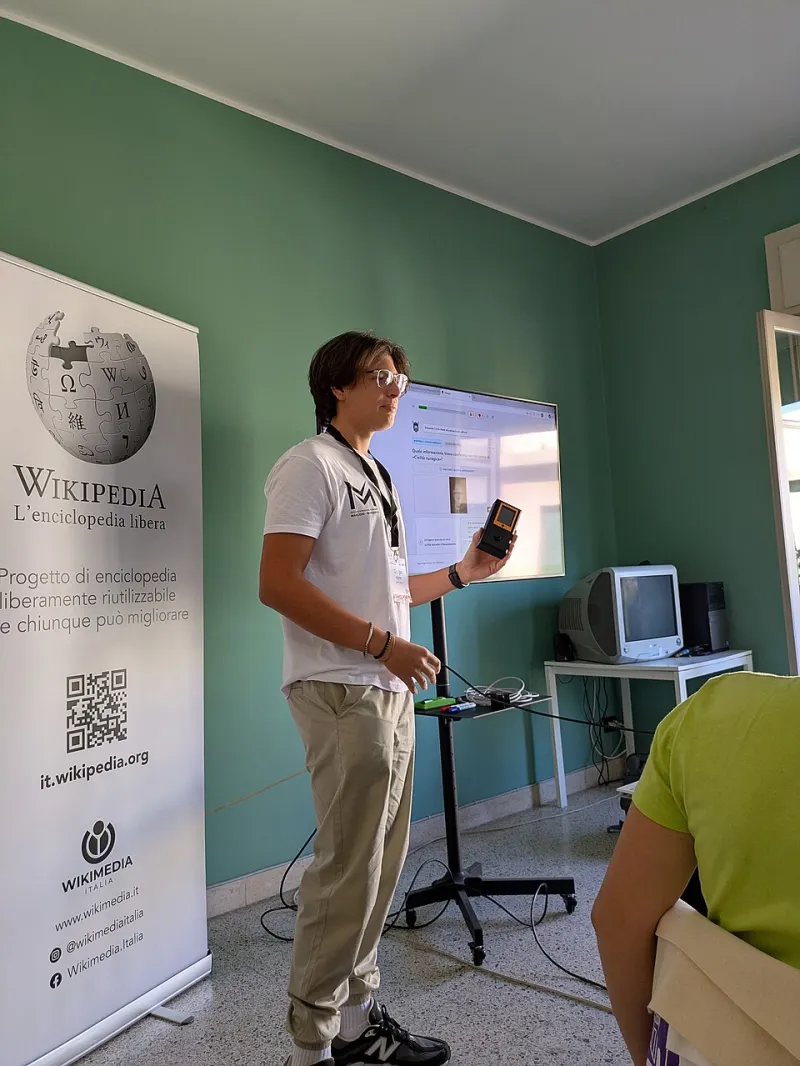
Photo: Auregann, CC BY-SA 4.0, via Wikimedia Commons
The take-home essay had a good run. For roughly a century, it served as a decent proxy for thought: if you could produce a coherent argument about a text you'd read, you probably understood the text.
That proxy is broken. A well-prompted model can turn out a competent five-page analysis of almost anything in under a minute, complete with plausible citations. Professors know this. Admissions committees know it. And hiring managers — many of whom graduated within the last decade and are using the same tools — absolutely know it.
Which is why the assessment is moving. Fast. Increasingly, the question isn't "what did you produce" but "can you explain how you got there, right now, without a script."
That's not a threat to students who actually do the work. It's an enormous advantage.
The shift: from product to process
Watch what's happening in classrooms and interview loops at the same time and the pattern is obvious.
On campus: more in-class writing, more oral defenses, more annotated drafts, more graded presentations, more "explain your answer" credit on exams. Several large public university systems have been expanding oral assessment options specifically because written work alone no longer confirms authorship of the reasoning.
At work: live case interviews, work-sample tests, whiteboard sessions, and the question that kills more candidates than any technical screen — "walk me through how you got to that number."
The common thread is explanation. Fluency is cheap now. The ability to be interrogated and hold up is not.
Your drafts are the evidence. Stop hiding them
Here's the uncomfortable part: the version history in your document is now part of your academic record. A file created at 11:04 p.m. and submitted at 11:41 p.m. tells a story whether you want it to or not.
You can either let that story be ambiguous, or you can make it deliberate. Some habits that turn an ordinary workflow into proof:
- Keep the messy draft. Don't overwrite your first attempt with the polished version. Save it.
- Write the outline by hand or in a separate doc. Outlines are the hardest thing to fake and the easiest thing to show.
- Date your notes. A paper notebook with dates in the margin is low-tech, durable proof that your thinking happened across weeks, not minutes.
- Keep your commit history if you're coding. Nothing is more convincing than a messy, incremental record of you getting it wrong eleven times.
- Save your dead ends. The argument you abandoned in week two is the strongest evidence that you were actually thinking in week four.
Learn to explain it in ninety seconds
If you can't give a clean ninety-second account of your own thesis without notes, you don't own it yet. This is a learnable skill and almost nobody practices it.
The method: close the document. Set a timer. Say out loud where you started, what you found, what changed your mind, and what you still can't fully explain. Record it on your phone. It will be bad the first time. Do it again.
Then try the harder version — explain it to someone outside the field. If your roommate in a completely different major can follow your logic, you understand it. If you find yourself reaching for jargon to cover a gap, you've located the gap.
Do this before every oral defense, presentation, and case interview. It's twenty minutes of work that separates you from a room full of people who memorized their own slides.
Use AI as a sparring partner, not a ghostwriter
Refusing to touch these tools isn't a strategy. Neither is letting them write for you. The useful middle is specific: make the model try to break your argument.
- Paste your thesis and ask for the three strongest objections to it. Then answer them yourself, in writing.
- Ask it to identify which of your claims lack evidence. Don't ask it to fix them.
- Ask it to play a skeptical professor for ten minutes and defend your position verbally.
- Ask it for the counterargument you're most likely to hear in an interview, and rehearse your response until it's short.
Every one of those uses leaves you with more thinking, not less. None of them produces a document you could hand in — which is exactly the point. And if your syllabus requires disclosure of AI use, disclose it. A clear note about how you used a tool reads as professionalism; getting caught hiding it does not.
Keep a thinking log
Three lines per study session in a notebook or a note app:
- What I believed at the start of this session.
- What changed.
- What I still can't explain.
That's it. Six weeks in, you'll have a record of intellectual movement that no one else in your class can produce — and a genuinely useful document when you sit down to write a personal statement or prep for a behavioral interview.
Where students get this wrong
The failure mode isn't laziness. It's mistaking fluency for understanding. AI output feels like comprehension; you read a clean paragraph and your brain says "yes, I knew that." You didn't. Recognizing an argument and constructing one are different skills, and only one of them survives an interrogation.
The other mistake is treating the confusion as the obstacle. The confusion is the learning. Every time you outsource a hard paragraph to a model, you skip the exact ten minutes that would have made the concept yours.
What to do this semester
- Pick one course and commit to doing the outline by hand before you open a laptop.
- Keep the draft trail, even if the instructor doesn't ask for it.
- Practice the ninety-second explanation for your next presentation.
- Ask one professor whether oral defense or a project journal is an option — some will say yes, and it will be the best grade you earn all year.
A polished document is no longer a credential. Being able to stand in a room, get pushed on your reasoning, and hold your ground still is — and it's more valuable now than it was when everyone assumed the essay was real.